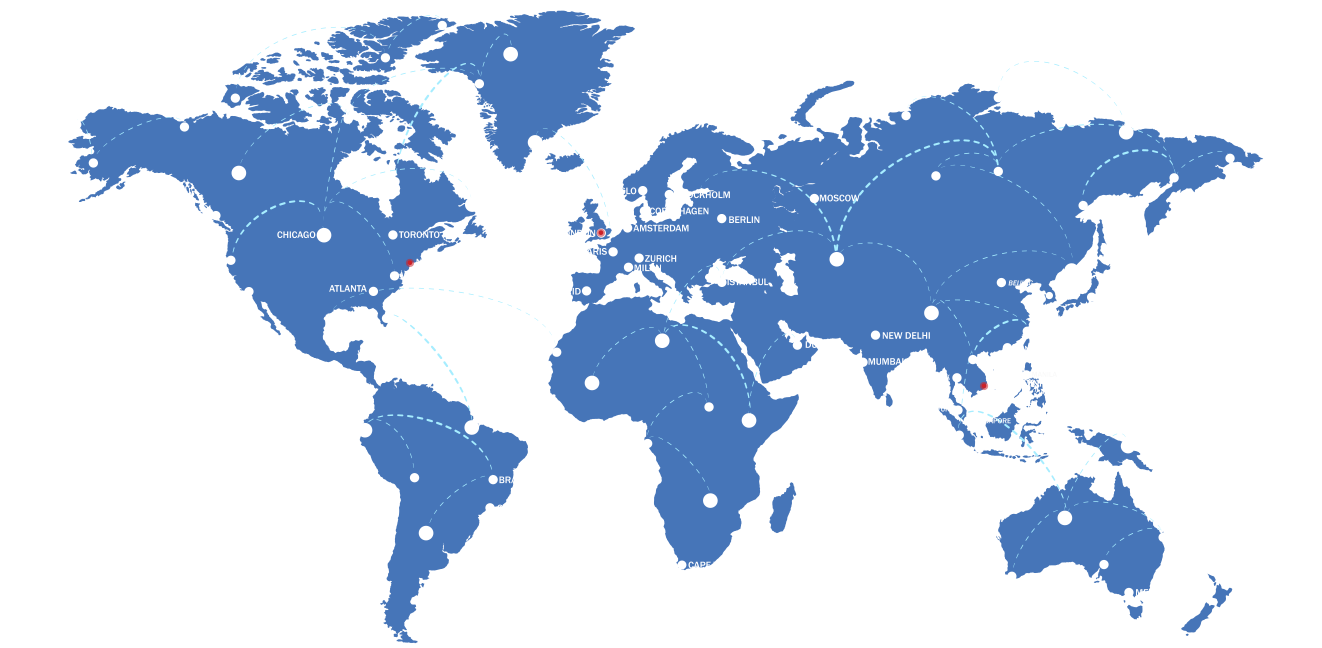

In the context of strong globalization and the development of international economies, the demand for internationally qualified human resources has become a crucial factor determining the sustainable development of nations and businesses. Training human resources not only meets the increasing demands of the labor market but also helps countries and businesses compete effectively in the global market. Here are some reasons explaining why training internationally qualified human resources is extremely important.
1. Meeting Global Demand and the International Labor Market
1.1. The Development of the Global Labor Market
The advancement of technology, international trade, and global cooperation agreements has created a global labor market that is increasingly interconnected and rapidly developing. Businesses are no longer limited to national borders but are expanding operations to other regions. Therefore, internationally qualified human resources will meet the stringent requirements for professional skills, foreign languages, and the ability to work in a multicultural environment.
For example, multinational corporations such as Google, Microsoft, and Samsung are always looking for employees who can work effectively in many countries and understand international markets. These employees can serve as bridges in global projects, coordinating with international departments and partners to promote the development of the business.
1.2. The Need to Improve Competitiveness
Nations and businesses need human resources capable of developing and maintaining a competitive advantage in the global business environment. Training internationally qualified human resources helps create individuals who not only have extensive professional knowledge but also understand international trends, are able to apply new technologies, and develop innovative strategies. This helps businesses quickly adapt to changes and avoid falling behind in a volatile global market.
2. Promoting Sustainable Economic Development
2.1. Enhancing Investment and International Cooperation
Internationally qualified human resources play an important role in attracting investment from other countries. International investors are always looking for markets with high-quality human resources that can meet global requirements. If a country has sufficient high-level human resources, it will become an attractive destination for international investment projects, promoting the development of the economy and creating many job opportunities.
In addition, businesses looking to expand into international markets will need employees who can build and maintain cooperative relationships with international partners. They will play an important role in expanding the business network, seeking cooperation opportunities, and implementing internationalization strategies.
2.2. Innovation and Creativity
Training internationally qualified human resources helps promote the innovation and creativity of businesses and nations. International human resources often have diverse and flexible thinking, helping them solve complex problems and find creative solutions to economic and social challenges. This is especially important in a world where change is rapid and businesses must continuously innovate to maintain competitiveness.
3. Enhancing Education Quality and Soft Skills
3.1. Developing Important Soft Skills
In addition to professional knowledge, soft skills such as communication, leadership, teamwork, and problem-solving in a multicultural environment are also very important. These skills help employees integrate and work effectively in an international environment, where differences in culture, language, and working styles can create significant challenges.
International training programs help employees develop these soft skills by learning from advanced education models, participating in international cooperation projects, and interacting with global experts and leaders. This is a key factor in helping them build leadership skills and work effectively in multinational environments.
3.2. Building International Relationships
Another important element of training internationally qualified human resources is helping employees build international relationships. These relationships are not only beneficial for personal careers but also contribute to the development of businesses and nations. Employees with extensive relationships and the ability to connect with global experts and partners will help strengthen cooperation and expand business opportunities for the organization they work for.
4. Addressing Global Challenges
4.1. Developing Global Solutions
In a globalized world, nations and businesses face global challenges such as climate change, epidemics, financial crises, and social issues. To address these challenges, it is necessary to have human resources capable of developing innovative solutions and responding effectively. Internationally qualified human resources will help nations and businesses build global strategies to address these issues and maintain sustainable development.
4.2. Adapting to Rapid Change
The global economic and social environment is changing very rapidly, and to survive and thrive, nations and businesses need to be able to adapt quickly to these changes. Training internationally qualified human resources helps build a team that is sensitive to changes and applies new working methods, helping them maintain competitiveness in a volatile global market.
Conclusion
Training internationally qualified human resources is not only a pressing need in the global business environment but also a key factor determining the sustainable development of nations and businesses. Internationally qualified human resources will help countries improve labor quality, promote innovation, and expand international cooperation, while helping businesses build a strong team to thrive in the global market. Therefore, investing in education and training internationally qualified human resources is an important strategy to prepare for the future.