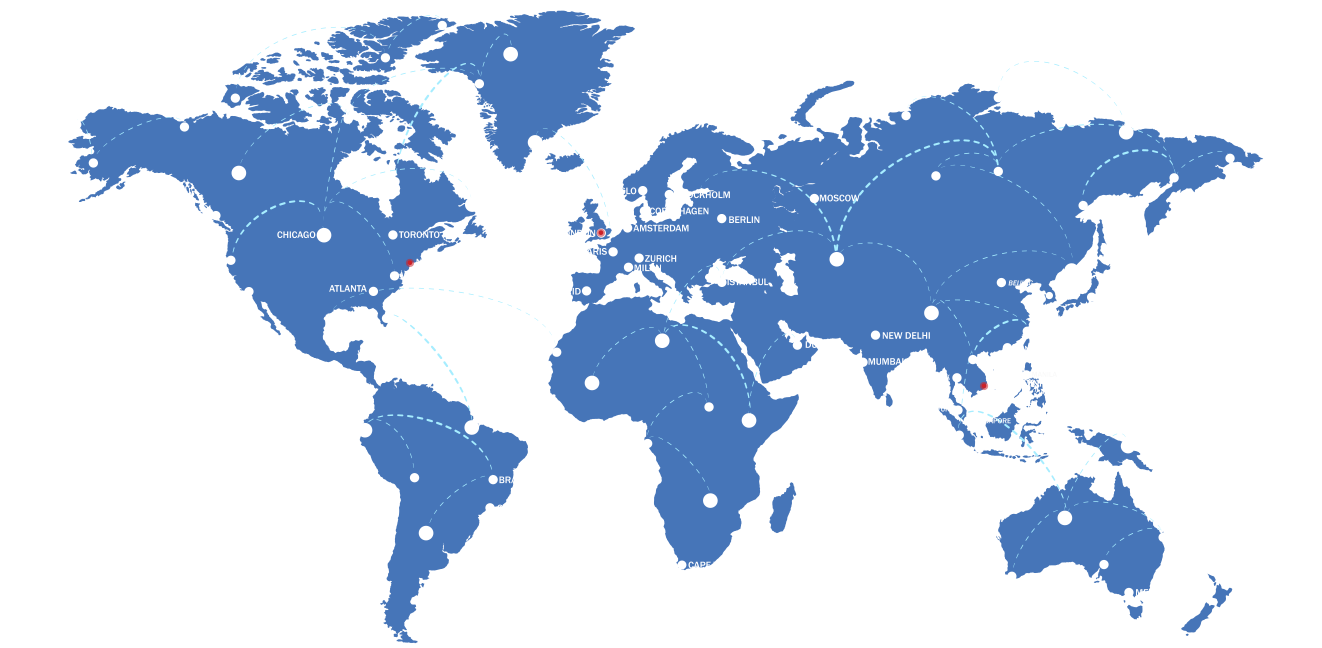

In Today’s Globalized Context, Training and Developing Human Resources with International Qualifications Has Become an Urgent Requirement for Countries and Businesses
With the strong development of globalization, countries and businesses are increasingly facing a challenging and opportunistic international business environment. In this context, training and developing human resources with international qualifications is not only a requirement but also a decisive factor for the success and sustainability of countries and businesses. Changes in working methods, international competition, and the demand for global skills have created a strong need for human resources capable of working in an international environment.
1. Meeting Competitive Demands in the Global Market
Globalization is not just the connection between countries but also the connection between economies and labor markets. To compete effectively, businesses and countries need human resources equipped with international knowledge, skills, and mindset. Internationally qualified personnel will help businesses enhance product development capabilities, expand markets, and build strategic partnerships with international partners. In addition, countries can increase their competitiveness on the international stage by possessing a workforce capable of meeting stringent requirements for skills, foreign languages, and creativity.
2. Supporting Global and Domestic Economic Development
Human resources with international qualifications play an important role in promoting the development of countries and businesses. Countries with highly qualified human resources capable of working in multinational environments will easily attract international investment capital. This is a key factor in developing key industries, creating more job opportunities, and contributing to sustainable economic growth.
Besides, when businesses have well-trained staff with global knowledge, they can improve production processes, enhance creativity, and find optimal solutions to global challenges. This helps businesses not only thrive in the domestic market but also expand into international markets easily and effectively.
3. Training Soft Skills and Enhancing International Communication Skills
In today’s world, professional skills are not the only factor for achieving success in a global environment. Soft skills, such as communication, teamwork, project management, and leadership in a multicultural environment, also play an important role. Training human resources with international qualifications not only provides professional knowledge but also helps develop these soft skills. These skills are crucial in working with partners from different cultures and countries, helping to build sustainable relationships and promote international cooperation.
4. Addressing Global Challenges and Opportunities
Global challenges such as climate change, financial crises, epidemics, and political instability are increasingly affecting the international economy. Countries and businesses need human resources that can adapt quickly to these changes. Training human resources with international qualifications helps prepare them not only with professional knowledge but also with the ability to solve problems creatively and flexibly in a volatile environment.
In addition, training internationally qualified personnel also opens up many opportunities for international cooperation in fields such as research and development, green technology, global healthcare, and other areas, which require the participation of experts and highly qualified teams to find solutions to urgent problems.
5. Strengthening Integration and Building International Relationships
Human resources with international qualifications not only help businesses and countries develop economically but also promote integration and connection with other countries and cultures. When employees can work effectively in a multinational environment, they not only help businesses easily expand into new markets but also create bridges between different cultures. This contributes to building an inclusive work environment and promoting innovation.
6. Improving Education Quality and Promoting Innovation
Training human resources with international qualifications also promotes the improvement of education and research quality in the country. Today’s global education systems, from international universities to professional training programs, create opportunities for learners to access the latest trends and techniques in industries. International training programs are regularly updated to keep pace with technological developments and market requirements, thereby helping to build a creative workforce capable of developing new products and services that meet global market needs.
Conclusion
In today’s globalized context, training and developing human resources with international qualifications has become an urgent requirement for countries and businesses. This is a decisive factor in helping countries enhance competitiveness, attract investment, and develop sustainably. For businesses, training international human resources not only helps them improve productivity and product quality but also creates opportunities to expand markets and cooperate internationally. Therefore, investing in training human resources with international qualifications is the key for countries and businesses to succeed and develop in the modern global economy.