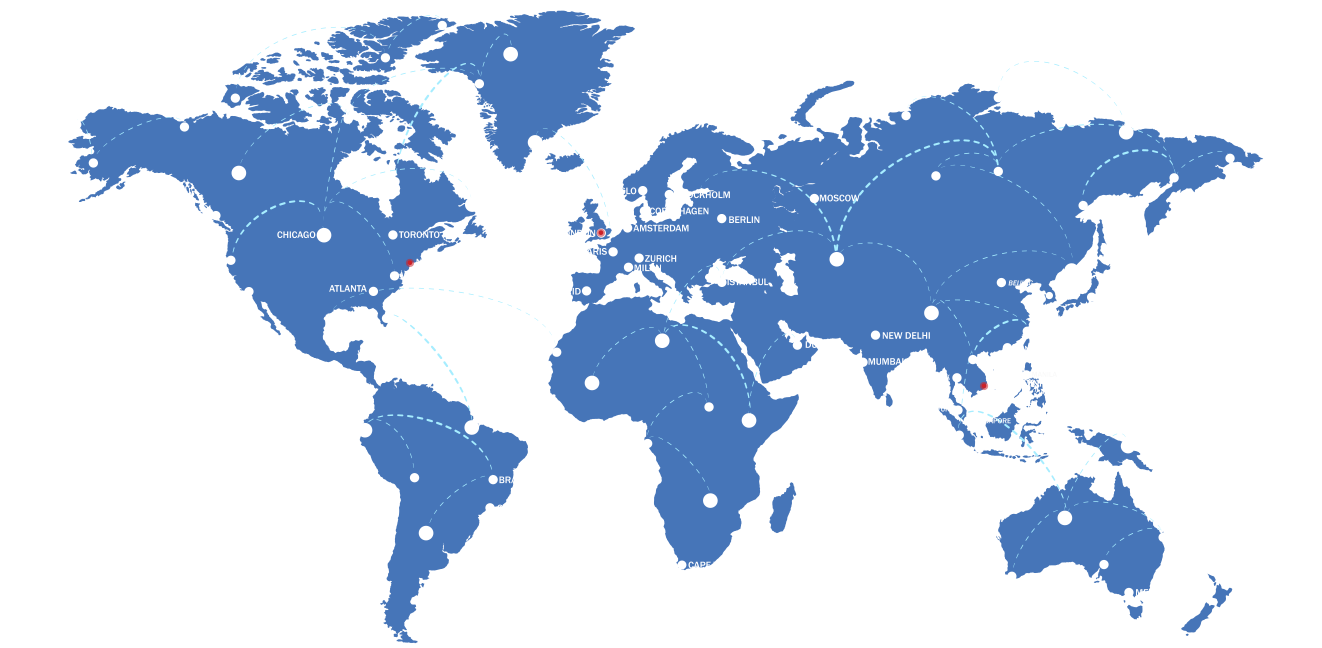

The global business environment plays a vital role in creating a network that connects international economies and communities, helping nations and businesses interact, cooperate, and develop sustainably. Globalization not only promotes trade transactions but also encourages the sharing of knowledge, technology, and resources, contributing to the promotion of economic and social development. Below are some key factors that the global business environment brings to connecting international economies and communities.
1. Promoting International Trade and Creating Market Expansion Opportunities
One of the important factors of the global business environment is the ability to promote international trade. Countries can access new markets, while businesses have the opportunity to expand export markets. Reducing trade barriers through free trade agreements (FTAs) and international organizations such as the World Trade Organization (WTO) facilitates the exchange of goods and services between countries.
For example, developed economies such as the United States, the EU, and Japan have strong connections with developing economies such as India, China, and Brazil. This environment creates opportunities for businesses to access huge consumer markets and increase export revenue.
2. International Investment Cooperation and Business Networks
The global business environment also creates opportunities for countries and businesses to cooperate in investment. Countries can attract capital from other countries to develop infrastructure, industry, and technology. Along with that, businesses can also seek international cooperation and investment opportunities to develop scale, expand production, and improve products/services.
Cross-border investment zones, such as Free trade zones and bilateral investment agreements, are important factors in promoting connectivity between economies and creating a global investment network. This helps developing countries receive investment from multinational companies, while international businesses can easily find investment opportunities in emerging economies.
3. Sharing Global Technology and Knowledge
The global business environment not only helps connect economies but also creates opportunities for countries and businesses to share technology and knowledge. Developed countries, through international cooperation, can transfer advanced technology to developing countries, helping to improve productivity and competitiveness.
Large companies like Apple, Microsoft, or Tesla are examples of global corporations with the ability to share technology and management experience. Countries and businesses can learn from these companies to improve production processes, improve product and service quality, and develop new technologies. For example, technology transfer in the field of renewable energy and production automation can help countries achieve sustainable development.
4. Creating Strategic Partnerships
Connecting international economies and communities also helps businesses build strategic partnerships, thereby increasing competitiveness and expanding operations. Businesses can establish relationships with international partners to collaborate in research and development, share resources, or expand distribution channels.
In addition, international strategic partners also help businesses reduce risks and optimize costs. Businesses in fields such as technology, manufacturing, and e-commerce have established global partnerships to optimize supply chains and deliver products/services to consumers worldwide.
5. Improving Sustainable Development and Social Initiatives
The global business environment not only promotes economic growth but also helps countries cooperate to solve global social and environmental problems, such as climate change, poverty, and inequality.
Through international organizations such as the United Nations and the World Bank, countries can cooperate to promote sustainable development initiatives. The global business environment promotes countries to share resources, technology, and problem-solving strategies, thereby improving the quality of life and protecting the environment for future generations.
6. Opportunities for Small and Medium Enterprises (SMEs)
A highlight of the global business environment is the opportunities it offers for small and medium enterprises (SMEs). In the past, SMEs often found it difficult to enter the international market due to lack of resources and information. However, with the development of technology and e-commerce platforms, SMEs can now easily access global markets without investing too much in infrastructure.
Small businesses can leverage tools like Amazon, Alibaba, and eBay to increase their presence in international markets, sell to customers around the world, and connect with global partners.
Conclusion
The global business environment creates a strong network connecting international economies and communities, helping countries and businesses cooperate, share resources, and knowledge to develop sustainably. From promoting international trade and creating investment opportunities to sharing technology and knowledge, the global business environment not only brings economic benefits but also creates positive changes in social and environmental aspects. Therefore, maintaining and developing global connections is important for the development of countries and businesses in today’s world.