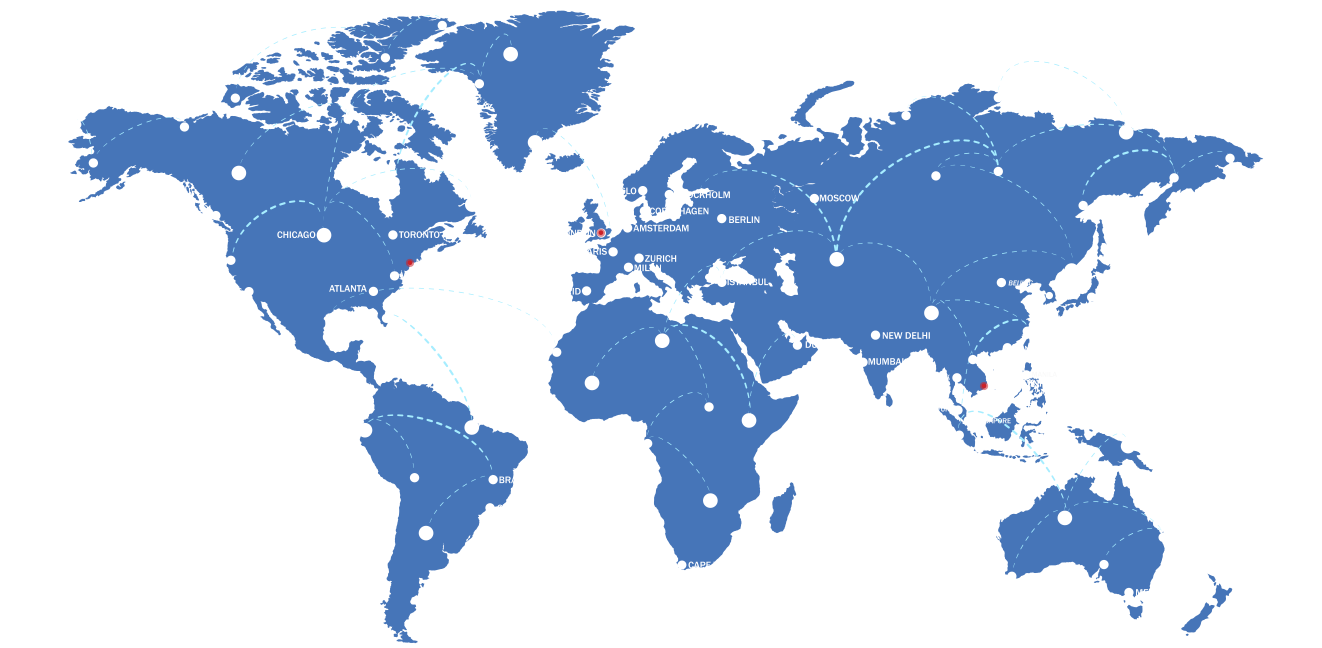

In today’s digital age, advanced technologies such as Internet of Things (IoT), Blockchain, and Artificial Intelligence (AI) are dramatically changing the way businesses operate and impacting the global economy. These technologies not only bring major improvements in production and management processes, but also create new opportunities, drive innovation, and open up entirely new business models. Below is an analysis of the impact of these three technologies on businesses and the global economy.
1. Internet of Things (IoT): Global Connectivity and Process Optimization
Internet of Things (IoT) is a network of smart devices, vehicles, and sensors connected via the internet, allowing data exchange and interaction without human intervention. IoT is opening up the possibility of connecting everything, from home appliances and transportation to industrial equipment.
Impact on Businesses:
Asset Management and Tracking: IoT helps businesses track and manage their assets in real-time. For example, in the logistics sector, companies can use IoT sensors to track the location of shipments, helping to minimize losses and optimize the delivery process.
Enhanced Production Efficiency: IoT can monitor production processes, collect data, and analyze it to detect problems or optimize performance. For example, in factories, IoT sensors can help monitor the condition of machinery and minimize downtime due to unforeseen maintenance.
Personalized Customer Experience: IoT also helps businesses provide better customer experiences. For example, IoT devices in the retail industry can track customer shopping behavior and provide relevant products or offers based on consumer habits.
Impact on the Global Economy:
Economic Growth and Product Innovation: IoT creates new opportunities in fields such as agriculture, healthcare, and transportation, promoting new innovations and growth in these industries.
Promoting Global Integration: The IoT environment connects countries, organizations, and businesses, enhancing cross-border collaboration and creating new business models.
2. Blockchain: Enhancing Transparency and Security
Blockchain is a distributed data storage technology that allows transactions to be recorded and secured without the intervention of a middleman. It stands out for its transparency, security, and resistance to change, making it suitable for financial transactions, supply chain management, and other areas requiring high authenticity.
Impact on Businesses:
Transparency and Security in Transactions: Blockchain helps businesses enhance transparency and security in transactions. Companies in the financial and banking sectors can use Blockchain to reduce fraud and increase the security of financial transactions.
Supply Chain Management: Blockchain technology allows businesses to track and verify the origin of products in the supply chain. This helps increase transparency and reduce the risk of fraud in the global supply chain.
Smart Contracts: Blockchain supports smart contracts, which automatically execute contract terms without third-party intervention. This helps reduce transaction costs and increase efficiency in international trade transactions.
Impact on the Global Economy:
Improving Global Financial Systems: Blockchain can change the way currencies are traded and international payments are made. Payment systems using blockchain help reduce transaction costs and processing times, while also promoting the development of cryptocurrencies.
Creating New Platforms for Business Models: Blockchain opens up opportunities for building decentralized trading platforms, such as stock exchanges, digital asset trading, or secure data storage systems.
3. Artificial Intelligence (AI): Innovation and Automation
Artificial Intelligence (AI) is a field of computer science research that involves creating systems capable of learning and solving problems like humans. AI has had and continues to have a strong impact on many fields, from production automation to data analysis and healthcare.
Impact on Businesses:
Automation and Process Optimization: AI helps businesses automate many processes, from warehouse management and production to customer care. Automation helps reduce operating costs and optimize production processes.
Data Analysis and Intelligent Decision Making: AI has the ability to analyze massive amounts of data and provide accurate predictions, helping businesses make strategic decisions based on accurate and timely information. For example, AI can analyze market trends and customer behavior to develop effective marketing strategies.
Personalized Customer Experience: AI allows businesses to create personalized customer experiences through chatbots, virtual assistants, or product recommendation systems, providing customers with the best experiences and enhancing satisfaction.
Impact on the Global Economy:
Boosting Global Productivity: AI helps increase labor productivity and production efficiency globally. Industries such as manufacturing, agriculture, and financial services can use AI to optimize production processes and increase productivity.
Opening Up New Careers and Opportunities: AI not only changes existing industries but also creates new jobs, such as AI software development, smart healthcare, and data service companies.
Conclusion
Technologies such as Internet of Things (IoT), Blockchain, and Artificial Intelligence (AI) not only change the way businesses operate but also have a strong impact on the global economy. These technologies help optimize production processes, improve customer experiences, reduce costs, and promote innovation. They create a flexible and connected business environment, opening up sustainable development opportunities for countries and businesses in the context of globalization. Therefore, the application and development of these technologies will be a decisive factor for the success of businesses in the future.