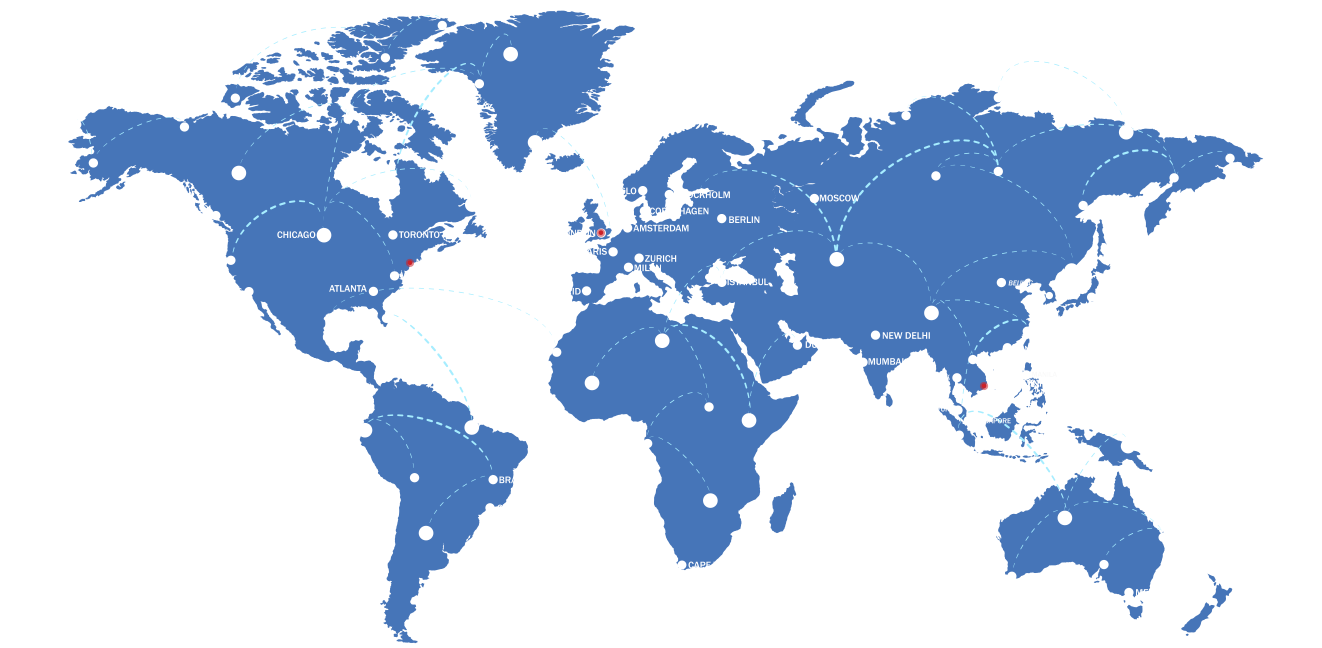

In the context of globalization, human resources have become a key factor in helping businesses and organizations achieve long-term success. Today, businesses are not only competing in the product market, but also competing to attract and develop talent from different countries. Training and developing global human resources not only helps businesses optimize work efficiency but also creates a sustainable competitive advantage. However, this process also faces certain challenges that organizations need to overcome.
1. The Importance of Global Human Resource Training and Development
a. Meeting the Needs of International Competition
When businesses operate on a global scale, they not only compete within the national scope but also face international competitors. Training and developing human resources helps organizations prepare a workforce capable of competing and innovating creatively, as well as maintaining sustainable development in the global market.
b. Promoting Innovation and Creativity
Well-trained human resources will promote creativity and innovation in work. Employees equipped with sufficient knowledge and skills can come up with innovative solutions, thereby improving work processes and developing products and services that meet global needs and trends.
c. Improving Work Efficiency and Project Management
A well-trained and developed workforce will help businesses operate more efficiently, reducing risks in managing and implementing international projects. A deep understanding of cultures, markets, and working methods in different countries helps increase the likelihood of success when deploying global projects.
2. Methods of Global Human Resource Training and Development
a. Distance Learning and Online Courses
With the development of technology, distance learning and online courses have become an effective training method for global employees. Businesses can provide their employees with online courses on professional skills, management, or knowledge related to culture and international markets.
Benefits: Online courses help employees save time and costs, while creating learning opportunities for employees in different locations around the world.
Example: Major technology companies such as Google and Microsoft have implemented online training programs for global employees to improve skills and leadership capacity.
b. International Exchange and Internship Programs
Another method to develop global human resources is through international exchange programs or internships at branches and offices in different countries. This helps employees better understand how to operate in different markets and cultures, while learning new working methods.
Benefits: Exchange programs help develop global thinking and communication skills in a multicultural environment, while providing opportunities for employees to accumulate valuable experience from new markets.
Example: Unilever has implemented international exchange and internship programs for employees, helping them better understand the global market and develop leadership skills in an international environment.
c. Global Leadership Training
An important factor in developing global human resources is training leaders who are capable of managing and operating international teams. Global leadership training programs help managers develop leadership, communication, and decision-making skills in a multicultural environment.
Benefits: Developing leaders with a global vision will help businesses create effective business strategies that are appropriate for each international market, while helping improve relationships with international partners and customers.
Example: Leadership training programs at General Electric (GE) or Coca-Cola focus on building a leadership team capable of managing international business operations, which helps the business maintain growth and global expansion.
d. Multicultural Training
With the diversity of cultures in the global business environment, training on culture and working habits in different countries is an important factor. This helps employees understand and respect cultural differences, thereby enhancing communication and collaboration skills more effectively.
Benefits: Cultural training helps minimize cultural conflicts, enhances harmony in the workplace, and creates long-term collaborative relationships with international partners.
Example: Companies such as IBM and Siemens have implemented cultural training programs to help employees better understand the cultural diversity in the global workplace.
3. Challenges in Global Human Resource Training and Development
Although training and developing global human resources brings many benefits, this process also faces some challenges:
a. Cultural Differences
One of the biggest challenges in training global human resources is the difference in culture and working habits between countries. This can make it difficult to communicate and coordinate work, especially when employees do not understand or do not respect the customs and working cultures in other countries.
b. High Training Costs
Providing global training programs can be costly, especially for small and medium-sized enterprises. These costs include travel and accommodation expenses for employees participating in international exchange programs, or the cost of organizing courses and conferences.
c. Managing and Measuring Training Effectiveness
Evaluating the effectiveness of global training programs is also a challenge. Businesses need to have systems to measure and track training results to ensure that investments in human resource development bring practical value and help businesses achieve their business goals.
Conclusion
Global human resource training and development is an important factor in helping businesses maintain and expand their development on a global scale. Building appropriate training programs, from professional and leadership training to understanding international cultures and working habits, will help businesses not only attract and retain talent but also develop strongly in a competitive global environment. However, to be successful, businesses need to overcome the challenges related to cultural differences, costs, and effective management of training programs.