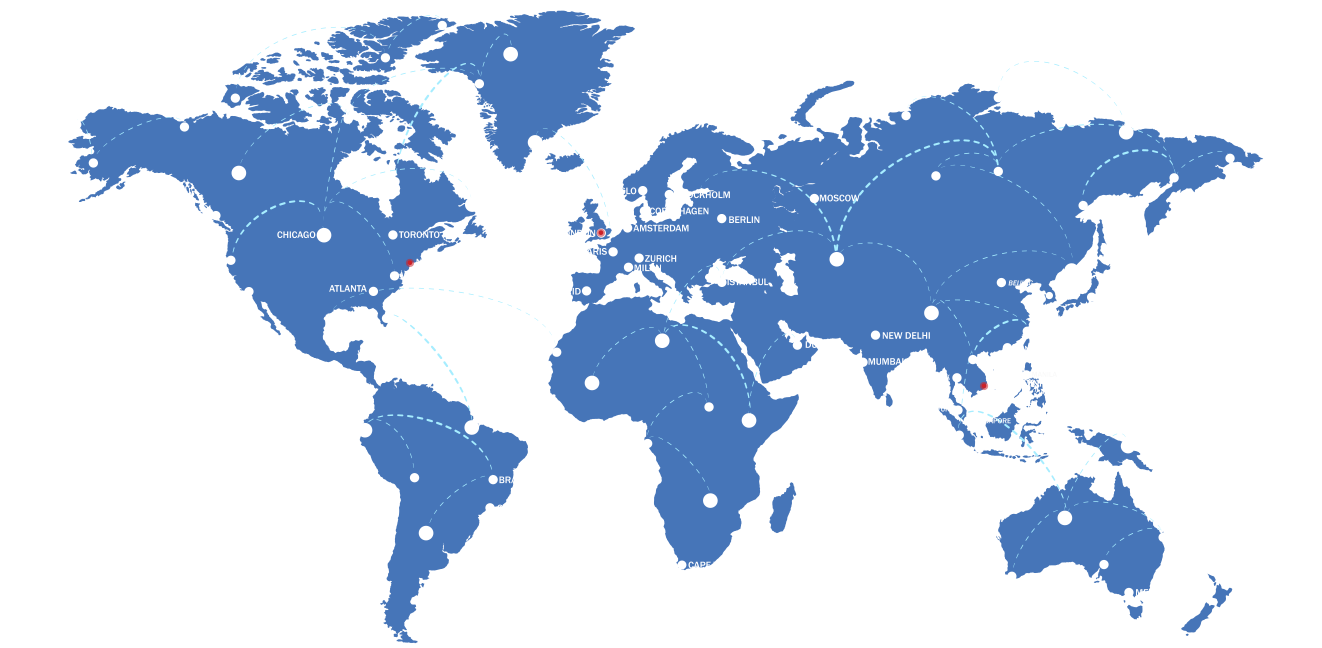

To successfully attract potential business investors, a well-defined strategy is not enough; meticulous preparation, a deep understanding of the international market, and the ability to build strategic relationships are also necessary. Below is an expanded analysis of the factors, strategies, and methods to help your business attract foreign investment.
1. Solid Business Model: Guiding Success
An effective business model is the foundation for attracting international investors. A business model not only reflects how a business generates profit but also demonstrates stability and scalability in the international market. A company needs to prove that it can maintain and grow profits in its home country before investing in foreign markets.
To develop a strong business model, businesses need to:
Clearly define the target market and customer needs: This is the basis for businesses to develop products and services that cater to the target market.
Develop diverse revenue streams: This helps businesses minimize risk and increase the ability to maintain growth in a volatile market environment.
Conduct thorough financial analysis: Investors always seek transparency in finances. Providing detailed financial reports and forecasts of profits, expenses, and cash flow is crucial.
2. Research and Prepare an International Strategy
Attracting international investors requires detailed preparation and a clear strategy. To minimize the risk factors of international expansion, businesses need to understand the conditions, markets, and trends in the countries they want to enter.
Specific preparation steps include:
Analyze international competitors: Understand the competitors operating in your region and industry to develop an effective competitive strategy.
Understand international regulations and laws: Each country has different regulations regarding taxes, labor, consumer protection, and intellectual property. Ensuring your business has a plan to comply with these regulations will help reduce risk.
Analyze the economy and market trends: Grasping changes in the global economy and market trends in the target country will help you make sound decisions in your development strategy.
3. Establish a Strong Presence on the International Network
A strong network is a key factor in attracting investors. With the development of technology and social networks, building an international network has become easier than ever. However, having social media is not enough; a strategy for connecting and maintaining relationships is needed.
Ways to build an effective network:
LinkedIn is a powerful tool for connecting with international investors and business partners. Businesses need to create a professional profile and regularly share information, research, achievements, and product updates.
Attend international conferences and industry events: Participating directly in major industry events helps businesses not only increase awareness but also create opportunities to meet potential investors directly.
Organize seminars and private events: Businesses can organize industry-specific events, seminars, or meetings with investors to introduce themselves, create opportunities for direct interaction, and build long-term relationships.
4. Choose a Suitable Investment Strategy (FDI)
Foreign direct investment (FDI) can be classified into two forms: horizontal investment and vertical investment. Each type has its own advantages and disadvantages, and you need to decide which one is suitable for your business strategy.
Horizontal Investment: This is a form of investment where the business merges with an international partner that has the same type of product or service. The goal is to expand scale and dominate the foreign market. This investment helps reduce competition and maximize market share in the target country.
Vertical Investment: The business invests in companies in the supply chain or services that complement its products. This helps enhance control over the supply chain and create economic advantages through process integration.
Choosing between horizontal or vertical investment depends on the long-term development goals of the business and the requirements of the international market you are targeting.
5. Government and Legal Environment: Important Role in Attracting Investment
The governments of countries can play an important role in attracting international investment. They can create a favorable environment for investors to feel secure when investing in their country.
Political and legal stability: International investors always seek a stable political and legal environment to ensure the safety of their investment.
Preferential tax policies: Low tax rates will attract international companies, especially in the fields of industry, finance, and technology.
Investment in infrastructure: A country with good transportation, telecommunications, and energy infrastructure will help reduce operating costs for companies, thereby increasing the competitiveness of businesses.
6. Building Attractive Policies and Environment for Investors
Government policies can directly impact investor decisions. Reforming regulations, reducing administrative procedures, and creating business support programs will help businesses easily attract international investors.
Key factors to improve:
Transparent investment policies: Providing clear and easy-to-understand information about regulations and policies supporting foreign investment will help investors feel secure.
Business support programs: Sponsorship programs, tax reductions, or financial support for new businesses will create a more attractive investment environment.
Conclusion
Attracting international investors is a complex process that requires meticulous preparation, a sound strategy, and efforts to build long-term relationships. To succeed, businesses need to have a strong business model, the ability to adapt to international markets, and support from governments and investment organizations. By implementing the right strategies and using effective networking, businesses will not only attract international investors but also expand and develop sustainably in the global market.