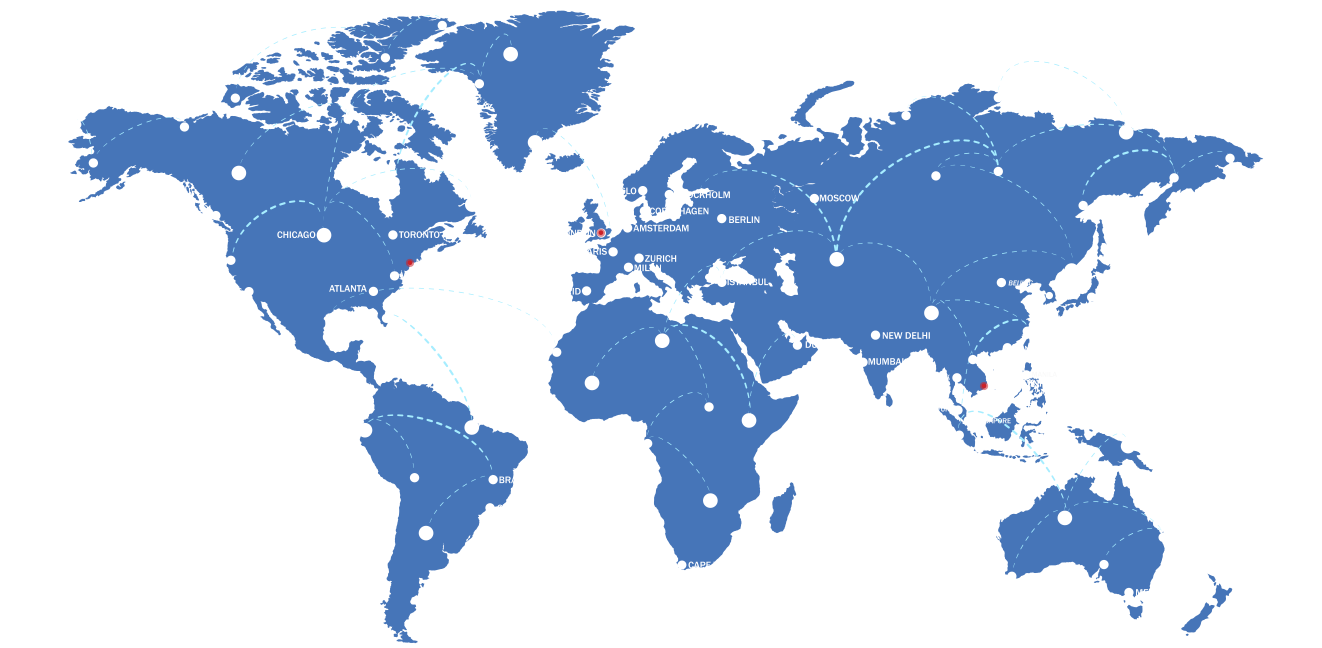

In today’s digital age, e-commerce has become an indispensable part of business development strategies, especially in reaching global customers. Utilizing e-commerce platforms not only helps businesses overcome geographical barriers but also creates opportunities to expand markets and increase revenue without requiring a physical presence in many countries.
1. Accessing a Global Customer Base
E-commerce offers businesses the ability to reach a huge customer base from all over the world. Through major e-commerce platforms such as Amazon, Alibaba, eBay, or Shopify, businesses can build online stores, introduce and sell products to any market without facing barriers of space, time, or resources.
Market expansion: Thanks to e-commerce, businesses are no longer limited to the national territory but can access millions of potential customers from different countries. This is especially important for small and medium-sized enterprises (SMEs) that do not have enough resources to establish branches or offices in target countries.
24/7 Customer Reach: E-commerce platforms operate 24 hours a day, 7 days a week, allowing businesses to serve global customers regardless of time zone, facilitating revenue growth.
2. Cost Savings and Business Process Optimization
One of the major benefits of e-commerce for businesses is cost savings. Businesses can minimize costs associated with maintaining physical stores, renting premises, or operating large warehouses. E-commerce platforms provide easy-to-use management tools that help businesses optimize their sales processes, from product storage and order management to online payments.
Lower operating costs: Instead of having to build infrastructure and hire staff in target countries, businesses can sell products online and operate everything from a single location. This reduces operating costs and helps businesses focus on developing products and services.
Effective management: E-commerce makes it easy for businesses to track and analyze customer data, shopping behavior, and revenue. These tools help businesses make smart strategic decisions, improve business processes, and serve customers better.
3. Global Advertising and Marketing
With e-commerce, businesses can not only sell products but also implement advertising and marketing campaigns at a reasonable cost and effectively. E-commerce platforms allow businesses to apply digital marketing strategies, including search engine optimization (SEO), paid advertising (Google Ads, Facebook Ads), email marketing, and online promotional campaigns.
Targeted advertising: E-commerce platforms allow businesses to conduct advertising campaigns with high precision, targeting the right customer base by age, interests, location, etc. This helps businesses save advertising costs and optimize customer reach.
Building a global brand: Companies can build their brand through digital marketing strategies, thereby enhancing brand awareness and increasing trust from international customers.
4. Safe and Easy Payments
International online payment systems have facilitated international transactions. Tools such as PayPal, Stripe, Apple Pay, and Google Pay make it easy for businesses to receive payments from global customers without experiencing difficulties in processing international transactions.
Secure online payments: These payment systems all provide high-security measures, ensuring that both businesses and customers are protected from the risks of fraud and financial risks.
Convenient and fast: Online payment transactions simplify the purchasing process for customers, thereby boosting revenue and improving the consumer experience.
5. Easy Scalability
E-commerce offers businesses the ability to expand into international markets without having to invest heavily in infrastructure or complex distribution networks. Thanks to technology, businesses can easily manage their business operations from a single location.
Easily scalable: With e-commerce platforms, businesses can expand their products and services to more countries without having to change too much in the operational structure, saving time and costs.
Sustainable growth: Expanding into international markets helps businesses diversify their income streams and reduce risks when one market faces difficulties. This creates opportunities for sustainable development in the long term.
Conclusion
E-commerce has become a decisive factor in helping businesses not only reach global customers but also expand into international markets without needing a physical presence in target countries. Leveraging e-commerce platforms and digital technology helps businesses reduce costs, optimize business processes, enhance customer experience, and achieve sustainable growth. In the modern digital age, not participating in e-commerce can cause businesses to lose many opportunities for development and competition in the international market.