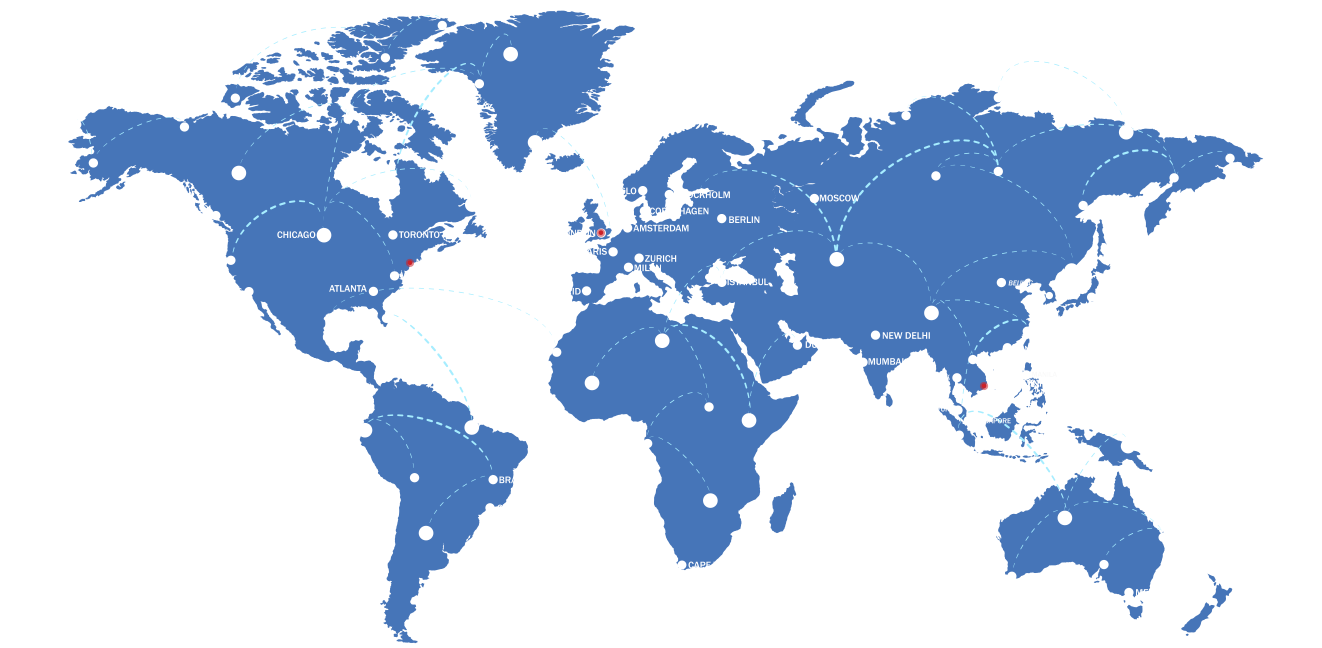

In the era of globalization, businesses are no longer limited to their national borders but are expanding into international markets. Operating and competing internationally not only helps businesses increase their scale and revenue growth but also brings many new development opportunities. However, at the same time, businesses also face numerous challenges in this fiercely competitive environment. This article will analyze the key factors in the operation and competition of businesses on an international scale, including opportunities and challenges, along with strategies to help businesses succeed.
1. The Importance of Operating and Competing Internationally
Entering the international market not only expands growth opportunities but also helps businesses build and strengthen their position in the industry. The main reasons why businesses participate in the global market include:
a. Expanding Markets and Increasing Revenue
When businesses expand their operations internationally, they can access untapped markets, increase revenue, and reduce dependence on the domestic market. A large market with many potential customers helps businesses optimize production scale, effectively utilize resources, and increase profits.
b. Leveraging Advantages Over Competitors
International operations help businesses take advantage of factors such as cheap labor, advanced technology, or available resources in other countries. This helps businesses produce at a lower cost, enhance competitiveness, and create products and services with superior quality.
c. Innovation and Product Improvement
International competition requires businesses to continuously improve products, innovate, and apply new technologies. Faced with fierce competition from international rivals, businesses must constantly innovate, thereby not only improving product quality but also promoting the development of the industry in which the business operates.
2. Opportunities When Businesses Operate Internationally
Operating in the international market brings a range of opportunities that businesses can leverage to develop:
a. Accessing International Finance and Investment
When expanding internationally, businesses have the opportunity to access capital from international investors. In particular, participating in international stock markets or attracting direct investment from large investment funds helps businesses have more financial resources to expand their scale and grow.
b. Exploiting Potential From Emerging Markets
Developing countries or emerging markets can be ideal destinations for businesses looking to expand their market. These markets not only have large consumer demand but also have low production costs, creating opportunities for businesses to develop rapidly.
c. Collaboration and Expanding Partnerships
International operations help businesses build strategic partnerships and collaborate with international companies in the same or related industries. International partners can help businesses expand their distribution networks, share technology and knowledge, and jointly develop and bring new products to market.
3. Challenges When Businesses Compete Internationally
Despite many opportunities, international competition also poses numerous challenges that businesses must face:
a. Cultural Differences and Consumer Tastes
When businesses expand to other countries, they face differences in culture, consumption habits, and market needs. This requires businesses to thoroughly research the target market, adjusting marketing strategies, products, and services to suit the local market.
b. Legal and Political Barriers
Each country has its own legal system, regulations, and policies, and sometimes these regulations can make it difficult for businesses to enter new markets. Barriers related to taxes, intellectual property rights, consumer protection policies, and import-export regulations can all affect the operational efficiency of businesses.
c. Fierce Competition and Competitor Strategies
When operating internationally, businesses face major competitors in the industry, including international companies and local businesses. Competition in price, quality, and innovation is very fierce. Businesses need a clear marketing strategy and build a sustainable competitive advantage to survive and thrive in the international market.
d. Supply Chain Management and Global Economic Risks
Businesses operating internationally need to build a flexible and efficient supply chain system, capable of coping with global economic fluctuations, such as inflation, exchange rate changes, or financial crises. In addition, managing risks related to politics, natural disasters, or epidemics is also an issue that international businesses need to pay special attention to.
4. International Competitive Strategies for Businesses
To succeed when operating and competing internationally, businesses need to implement appropriate strategies:
a. Focus on Quality and Innovation
Businesses should invest in research and development (R&D) to improve product quality and create innovative products and services to meet the needs of the international market. This helps businesses compete not only on price but also on value and quality.
b. Building a Global Brand
Building a strong brand is one of the key factors for competing in the international market. A brand not only helps businesses build credibility but is also an important factor for customers to recognize and choose the business’s products and services.
c. Local Market Orientation
Businesses need to thoroughly research the local market before entering. Factors such as culture, consumption habits, living standards, and customer needs need to be clearly understood to adjust products and marketing strategies accordingly. This helps businesses easily approach and build trust with customers in the new market.
d. Using Technology and Optimizing Management
Businesses need to apply new technologies to optimize production operations, reduce costs, and increase business efficiency. The application of technology also helps businesses manage supply chains, logistics, and marketing activities more effectively.
5. Conclusion
Operating and competing on an international scale brings many opportunities but also many challenges for businesses. To succeed, businesses need a clear strategy, seize opportunities, and at the same time overcome the challenges related to culture, law, competition, and supply chains. The international market is not only an opportunity for growth but also a place for businesses to affirm their position and develop sustainably in an increasingly globalized business world.