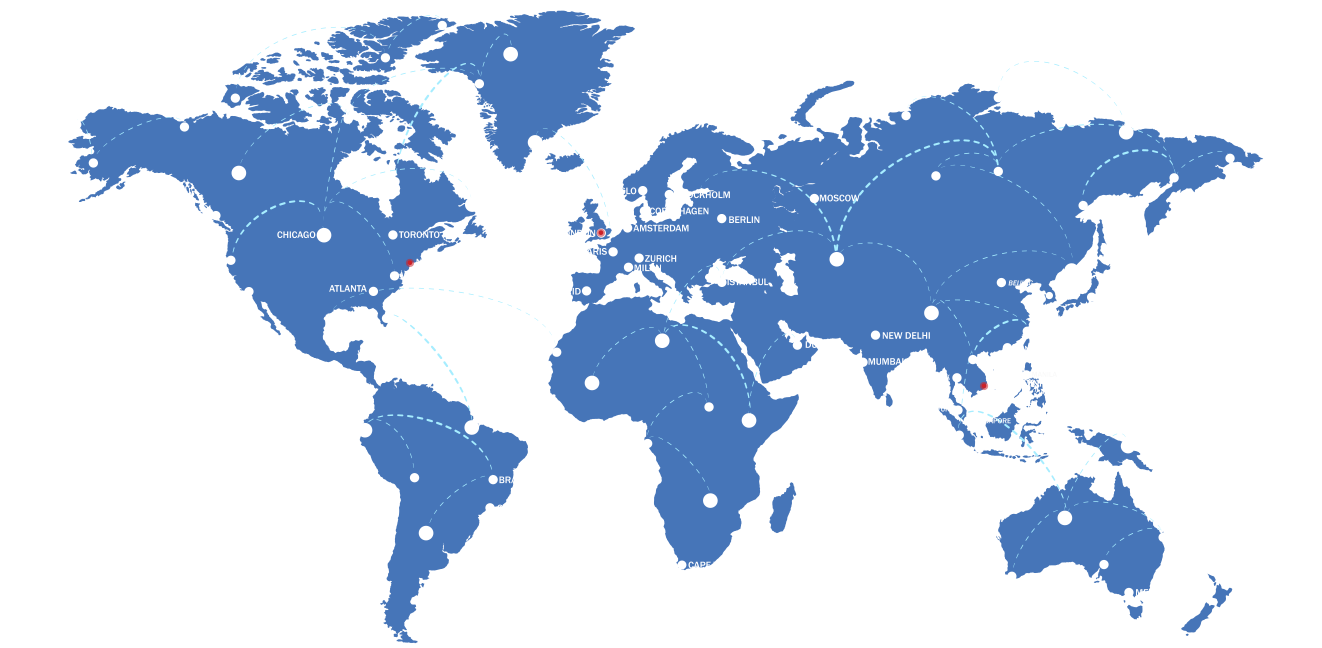

In the context of an increasingly developed and interconnected global economy, building a global business environment is a decisive factor for the sustainable development of nations and businesses. A global business environment not only creates market expansion opportunities but also promotes creativity, technological innovation, and enhanced competitiveness for businesses. This article will analyze the importance of building a global business environment and strategies to develop such an environment.
1. Global Business Environment: Concept and Role
The global business environment refers to the integration and connection of national economies, financial markets, technologies, and other resources, creating a business space in which organizations and businesses can operate and compete internationally. This environment includes not only economic factors but also political, social, technological, and legal factors that affect business operations.
The role of the global business environment is crucial in promoting the development of the world economy. It helps:
Market expansion: Businesses can reach global customers, not limited by national borders.
Investment growth: The global business environment creates international investment opportunities, helping countries and businesses mobilize capital more effectively.
Promoting competition and innovation: When businesses operate on a global scale, competition will drive innovation, product and service improvements.
Sharing knowledge and technology: Countries and businesses can exchange technology and knowledge, thereby improving production capacity and product quality.
2. Importance of the Global Business Environment
The global business environment is not only important for large enterprises but also for small and medium-sized enterprises. Here are some reasons why building a global business environment is extremely necessary:
a. Ensuring Sustainable Economic Growth
In an increasingly globalized world, countries cannot develop in isolation from global trends. Building a global business environment helps countries maintain stable economic growth and sustainable development, while creating more jobs and income for people.
b. Creating Conditions for Businesses to Innovate and Compete
When businesses operate in a global environment, they have the opportunity to learn from international competitors and improve production processes, products, and services. This promotes innovation in business, helping businesses maintain a competitive advantage.
c. Connecting Economies and the International Community
The global business environment creates a network connecting economies and the international community. Through this, countries and businesses can cooperate in development projects, share resources and knowledge, and address global issues such as climate change, energy security, and sustainable development.
3. Factors That Create a Global Business Environment
To build an effective global business environment, it is necessary to consider and develop the following basic factors:
a. Global Policies and Legal Regulations
One of the most important factors in building a global business environment is policies and legal regulations. Governments of countries need to establish free trade policies, reduce trade barriers and create conditions for businesses to participate in international business activities. International trade agreements such as the World Trade Organization (WTO), the North American Free Trade Agreement (NAFTA), or the Comprehensive and Progressive Agreement for Trans-Pacific Partnership (CPTPP) are typical examples of building a global legal framework for trade and investment.
b. Technology and Digital Infrastructure
Technology and digital infrastructure play an important role in connecting businesses and countries globally. The development of advanced information technology systems helps organizations trade, share data, and collaborate effectively. Technologies such as the Internet of Things (IoT), Blockchain, and Artificial Intelligence (AI) are changing the way businesses and the global economy operate.
c. Enhancing Education and Quality Human Resources
To build a global business environment, improving the quality of human resources is a key factor. Countries need to invest in education and training to create a workforce with the skills and ability to adapt to the changes of the global economy. International training programs, knowledge exchange, and practice also help countries and businesses maintain global competitiveness.
d. Stable Political and Economic Environment
A stable political and economic environment is a prerequisite for businesses to feel secure in investing and operating internationally. Governments need to maintain a stable political environment, protect the interests of investors, and ensure a fair and transparent legal system. Political mechanisms such as bilateral agreements and multilateral agreements also help minimize risks for investors.
4. Strategies for Developing a Global Business Environment
To develop a strong and sustainable global business environment, countries and businesses need to apply some of the following strategies:
a. Promoting Free Trade Policies and Market Expansion
Countries need to actively participate in free trade agreements to minimize trade barriers and expand opportunities for businesses to access international markets. This will help promote the circulation of goods and services globally, thereby boosting economic growth.
b. Investing in Research and Development (R&D)
To maintain competitiveness in the global business environment, countries and businesses need to invest heavily in research and development. This not only helps improve technology but also helps create new products that meet the needs of global consumers.
c. Building Strategic Partnerships
Building strategic partnerships between countries and businesses globally will help the parties cooperate to develop, share technology, expand markets, and create investment opportunities.
d. Training and Developing Global Human Resources
Countries and businesses need to train and develop human resources with international qualifications. Investing in quality education, creating in-depth training programs, and supporting the development of global skills are necessary to meet the increasing demands of the international business environment.
5. Conclusion
Building a global business environment not only helps countries and businesses develop sustainably but also creates opportunities to connect, cooperate, and compete in the international market. The global business environment helps promote innovation, economic growth, and improve the quality of life of people. With the right development strategies and investment in key factors such as trade policy, technology, human resources, and political stability, countries and businesses can build a strong global business environment, meeting the requirements and challenges of the era of globalization.